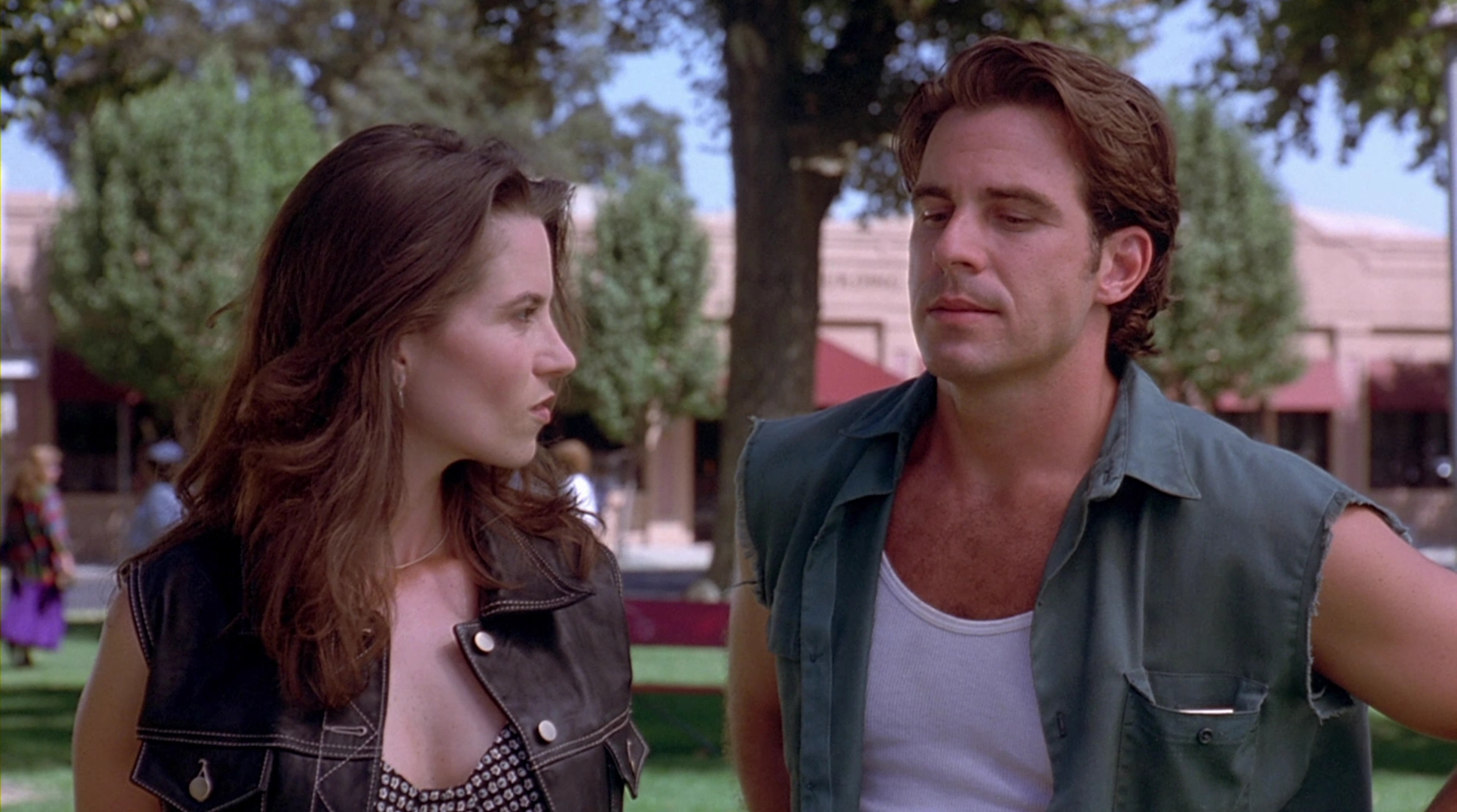
If you spent any time browsing the horror section of a Blockbuster in the mid-90s, you definitely saw it. That creepy, burlap-faced figure on the box art. It’s a classic image. Honestly, Night of the Scarecrow is one of those movies that feels like a fever dream from 1995. It’s not the one with Bubba Ritter from the 81’ TV movie, and it’s definitely not the Batman villain. We are talking about Jeff Burr’s bloody, supernatural romp that basically tried to turn a garden variety farm tool into the next Freddy Krueger.
It didn’t quite work out that way, obviously. But man, it tried hard.
The film follows a group of teenagers—because of course it does—who accidentally release the spirit of a warlock executed by a lynch mob a century prior. This warlock, played with a surprising amount of physical menace by Howard Swain, isn't just a guy in a mask. He’s a magical entity that can liquefy people, sew their mouths shut, and pull off some of the most creative kills of the straight-to-video era. It’s dark. It’s gritty. It has that specific 90s grime that you just don't see in modern, over-polished digital horror.
The Resurrection of Jeff Burr’s Vision
Jeff Burr is a name horror fans should know. He directed Leatherface: The Texas Chainsaw Massacre III and Pumpkinhead II: Blood Wings. He knew how to handle a franchise, but with Night of the Scarecrow, he was trying to build something from the ground up. You’ve got to appreciate the ambition here. Most scarecrow movies are low-budget, boring affairs where a guy in a flannel shirt walks slowly through a cornfield. Burr went the other way. He leaned into the supernatural.
The plot kicks off in the town of Emerald Lodge. A hundred years ago, the townspeople killed a warlock and trapped his soul in a scarecrow. Fast forward to the "present" day, and some construction workers (including a very young John Hawkes) accidentally break the seal. Once the warlock is out, he’s not just looking for a snack. He wants revenge on the descendants of the people who killed him.
It’s a classic "sins of the father" trope. It works because the stakes feel personal.
One thing that stands out is the practical effects. We’re talking pre-CGI dominance. The makeup team, led by Norman Cabrera, did some incredible work. There’s a scene involving a character getting their mouth sewn shut that still makes people squirm thirty years later. It’s tactile. You can almost feel the burlap. That’s the magic of 90s horror; if they wanted something to look gross, they had to actually build it.
Why the Warlock Scarecrow Hits Differently
Most slashers are silent. Michael Myers doesn't talk. Jason Voorhees just grunts. But the warlock in Night of the Scarecrow has a personality. He’s arrogant. He’s cruel. He uses magic in ways that feel genuinely unfair to the protagonists. It makes him a much more formidable threat than just a guy with a machete.
Let's look at the "Death by Corn" scene.
💡 You might also like: Album Hopes and Fears: Why We Obsess Over Music That Doesn't Exist Yet
It’s iconic for a reason. Instead of just stabbing someone, the Scarecrow uses the environment. He makes the corn grow through a person. It’s visceral and weirdly beautiful in a morbid way. This is where the movie earns its cult status. It pushes the boundaries of what a "slasher" could be by incorporating dark fantasy elements.
The cast is actually pretty solid for a mid-tier horror flick. You have Elizabeth Barondes and Christie Abbott leading the charge, but the real treat is seeing character actors like Bruce Glover and the aforementioned John Hawkes. They give the movie a sense of legitimacy that a lot of its contemporaries lacked. They aren't just "victim #3" or "victim #4." They feel like people you might actually meet in a small town, even if that town is being terrorized by a straw-stuffed sorcerer.
Breaking Down the Visual Style
The cinematography by Thomas L. Callaway deserves a shout-out. He uses a lot of deep ambers and harvest golds. It feels like autumn. It feels like the Midwest, even if it was shot in California. The lighting in the barn sequences is particularly effective, creating long shadows that make you wonder if every shadow is actually the killer.
It's atmospheric.
Compare this to something like Scarecrows (1988). That movie is great, don't get me wrong, but it’s very military-focused and dark. Night of the Scarecrow is more colorful, more "comic book" in its presentation. It’s a funhouse ride.
The Legacy of 1995 Horror
1995 was a weird year for horror. We were in that slump between the end of the 80s icons and the meta-slasher explosion of Scream in 1996. Because of that, movies like this often got lost in the shuffle. It was the era of Halloween: The Curse of Michael Myers and Lord of Illusions. People were looking for something new, but they weren't quite sure what it was yet.
Night of the Scarecrow represents the end of an era.
It was one of the last hurrahs for high-concept, practical-FX-driven horror before everything went digital and self-referential. It doesn't wink at the camera. It doesn't tell you it’s a movie. It just tries to scare the hell out of you with a spooky warlock. There's a sincerity there that's honestly refreshing.
📖 Related: The Name of This Band Is Talking Heads: Why This Live Album Still Beats the Studio Records
Critics at the time weren't exactly kind. Variety and other big trades mostly ignored it or dismissed it as more direct-to-video fodder. But horror fans are a different breed. We remember the movies that actually put in the effort. Over the years, thanks to boutique Blu-ray releases from companies like Olive Films, the movie has found its audience. People are finally realizing that Jeff Burr made a really tight, mean little thriller.
What Most People Get Wrong About This Movie
The biggest misconception is that it’s a sequel or a remake. It’s not. It’s a completely standalone story. People often confuse it with Dark Night of the Scarecrow, the 1981 made-for-TV movie. While that one is a masterpiece of suspense, this 1995 version is a different beast entirely. It’s more of an action-horror hybrid.
Another mistake is assuming it’s "campy." Sure, there are some 90s flourishes that feel a bit dated now, like the fashion and some of the dialogue. But the kills are played straight. The gore is mean-spirited. This isn't a "so bad it's good" movie. It’s a "actually pretty good if you like the genre" movie.
If you go in expecting a slow-burn psychological thriller, you’ll be disappointed. This is a movie about a magical scarecrow killing people in a variety of gruesome ways. It delivers exactly what it promises on the box.
The Practicality of Burlap
There is something inherently terrifying about a mask that doesn't move. The Scarecrow's face is static, but the eyes—those human eyes peeking through the holes—are what do the work. Howard Swain's performance is all in the body language. He tilts his head like a bird of prey. He moves with a jerky, unnatural rhythm.
It’s a masterclass in low-budget creature performance.
Is It Worth a Watch in 2026?
Absolutely. Especially if you're tired of the "elevated horror" trend where every monster is actually a metaphor for grief. Sometimes, you just want a monster that is a monster because he's an evil warlock who hates your grandpa.
Night of the Scarecrow satisfies that itch.
👉 See also: Wrong Address: Why This Nigerian Drama Is Still Sparking Conversations
It’s a perfect October movie. It fits right in with a marathon of Sleepy Hollow or Pumpkinhead. It’s a vibe. It’s the cinematic equivalent of a haunted hayride where the actors are actually trying to hurt you.
The pacing is brisk. At around 85 minutes, it doesn't overstay its welcome. It gets in, kills a bunch of people, shows off some cool makeup, and gets out. In an age of two-and-a-half-hour epics, there's something to be said for a movie that knows how to wrap things up.
How to Experience Night of the Scarecrow Today
Don't settle for a grainy YouTube rip. The cinematography is too good for that. You want to see the texture of the burlap and the glistening of the (fake) blood.
- Seek out the Blu-ray: The Olive Films release from a few years back is the gold standard. It cleans up the image without scrubbing away the grain.
- Watch it with friends: This is a great "pizza and beer" movie. It's fun to react to the kills together.
- Double feature it: Pair it with Jeff Burr’s Pumpkinhead II. It’s a fascinating look at how a director handles similar themes with different budgets.
- Pay attention to the background: There are some great environmental storytelling cues in the warlock’s lair that are easy to miss on a first watch.
The film is a relic, sure, but it’s a shiny one. It’s a reminder that even when the industry was changing, there were still creators out there trying to make something weird and memorable. Night of the Scarecrow isn't a masterpiece of high art, but it is a masterpiece of its specific, gore-soaked niche.
If you haven't seen it, you're missing out on one of the best creature designs of the 90s. If you have seen it, it's probably time for a rewatch. The corn is calling.
Actionable Next Steps
To truly appreciate the era of Night of the Scarecrow, your next move should be exploring the filmography of Jeff Burr. Start with Pumpkinhead II: Blood Wings to see how he handles another iconic creature, then move to Leatherface: Texas Chainsaw Massacre III for a look at his work within a major franchise. For the best viewing experience, check specialized horror streaming platforms like Shudder or look for physical media collectors who often trade these out-of-print titles on sites like Orbit DVD or DiabolikDVD.